


Newsletter 201 – 01.05.2026
At the end of last year's seasonwe published a summary titled “The southern season did not meet all expectations.” This year the title could be exactly the opposite “The campaign exceeded all expectations.” A suitable climate, without major inclement weather in the main productive regions, expansion of surface area and northern markets receptive to contrast citrus fruits, led to a strong recovery in exports, reaching commercial records in many cases.
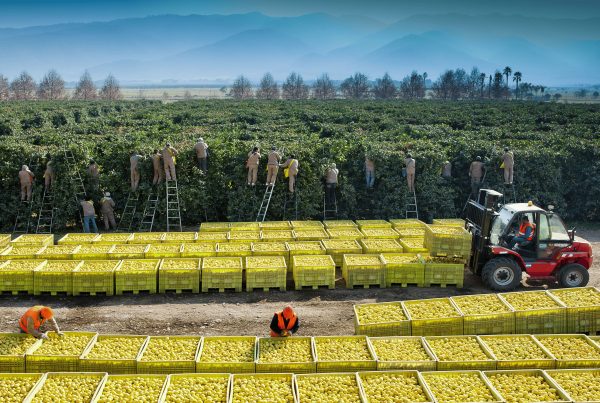
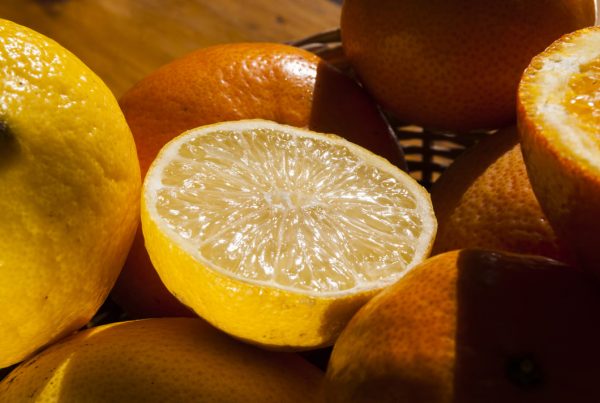
LEMON
The world lemon trade is characterized by cycles of alternating favorable and unfavorable years, with strong price fluctuations, a consequence of the inelastic demand for lemon. In recent years, the sector went through a negative cycle due to the strong expansion of its production worldwide. South Africa in particular bet a few years ago on “yellow gold”, doubling its surface area, as well as its exports, in a few years. Chile also shows a growing trend in its exports. In contrast, Argentina reduced its fresh lemon exports as a result of a loss of competitiveness associated with adverse national policies, although it maintains its leadership in lemon industrialization.
This year had the advantage of lower lemon production in the Mediterranean, which led Europe to demand lemons from the southern hemisphere early. As a result, all southern exporters significantly increased their shipments. These volumes were well received, with acceptable prices during much of the campaign, only towards the end was a collapse of both the market and prices observed. Asian markets were also more receptive, purchasing higher volumes than usual. On the other hand, the relationship with the US was more complex; The imposition of a 10% tariff limited opportunities and led to a retraction of shipments from all suppliers.
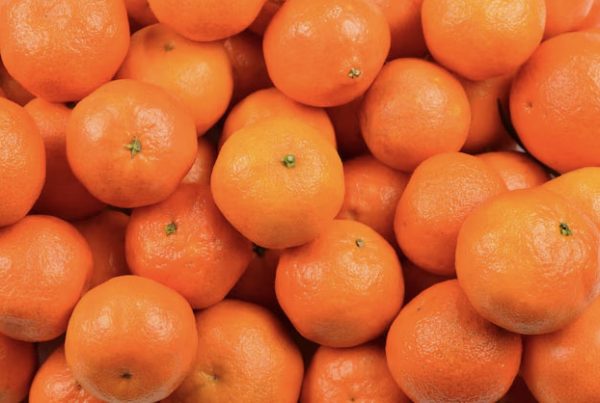
MANDARIN
The conquest of the mandarin in the world fruit market is undeniable and the southern countries were part of this. Year after year, shipments to northern markets increase; to such an extent that in a decade the volumes exported by the southern hemisphere tripled. It is the late mandarins that take most of the trophy. Among the keys to success are: their excellent flavor, their attractive appearance, the absence of seeds and the strategic time of year in which they enter the markets. These mandarins reach the consumer at the end of summer and beginning of autumn; a period in which interest in citrus fruits is reborn. After a summer with little citrus supply, the end of summer fruits and the restart of school and work activities, consumption is driven by the need for practical and healthy foods. The excellent quality of the late ones displaced the early varieties from the northern hemisphere, which cannot compete in flavor and appearance with the late ones. South Africa, Peru and Chile knew how to capitalize on this opportunity and in 2025 they increased their shipments again, recovering from the previous season affected by the weather.
The two big markets are Europe and the US. The latter, despite the changes in its trade policy, imported more southern mandarins this year than in 2025. Europe, for its part, strongly increased its imports. The increase in availability was able to be placed on the market, without generating a significant deterioration in prices.
ORANGE
Unlike the mandarin, the orange trade is relatively stable. The volumes exported by the southern hemisphere remain around 1.4 million tons. A characteristic of this citrus fruit is the strong predominance of South Africa, which concentrates approximately 75% of southern exports, leading both the segment of dessert oranges and juice.
In 2025, South Africa managed to recover its shipments, after a year marked by climatic, logistical and phytosanitary complications. It increased its exports to all destinations; The most important markets being Europe and Asia. Australia also slightly increased its exports, focusing mainly on Asian markets. The US is supplied mostly by Chile, followed by South Africa and Australia. Although the imposition of tariffs by the US complicated trade, Chile once again managed to place most of its exports in the North American market.
Authors: Ing.Agr. Betina Ernst