


Newlsletter 207 – 04.09.2026
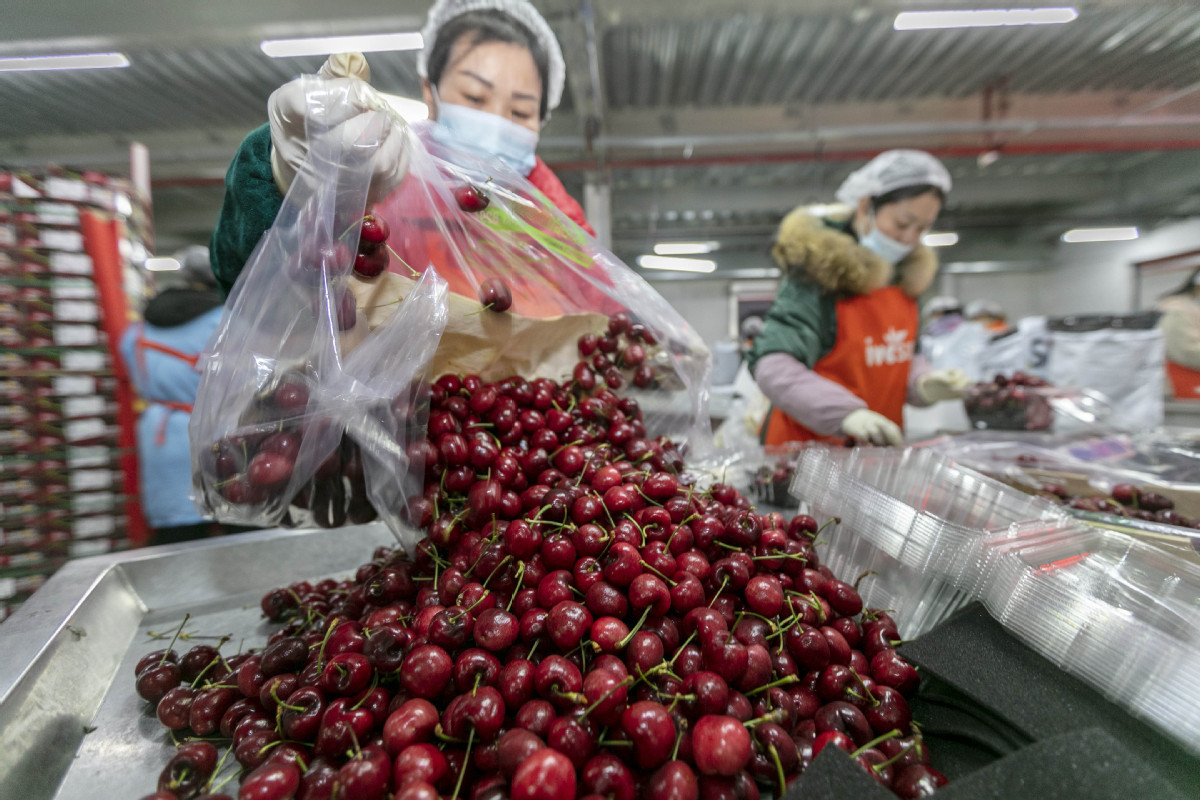
For years, the cherry was the “pretty girl” of southern fruit exports. The Chilean fruit sector bet heavily on this crop, attracted by the high returns. Its cultivated area grew explosively. China was the engine of this evolution, having a demand that seemed practically unlimited and paying very high prices.
However, in the last two campaigns this scenario suffered a strong setback. Prices were no longer what they were in the past, placing the fruit was difficult, quality problems arose and serious logistical complications were recorded. In essence, the deal shows that the sharp increase in supply is not finding enough markets willing to validate the high prices that originally fueled the enthusiasm.
Chile 2025-2026
The season ended with exports of 114 million boxes, equivalent to 570,000 tons. This volume represents a 9% drop compared to the previous campaign, when a record of 625,000 tons was reached. The decrease responded to climatic factors (lack of cold hours, spring frosts and rain), productive (alternation) and commercial (fall in prices).
China remained as the main destination, although its share fell from 94% to approximately 87% of shipments. The minor destinations were North America (5%), other Asian countries (4%), Latin America (3%) and Europe (1%). This change in importance reflects the sector's efforts to diversify its markets. But the achievements are still small, making it very difficult to reduce dependence on China.
The season began 10 to 15 days earlier than usual, favored by weather conditions, more early varieties and improvements in management. However, the initial prices were not as expected due to quality problems in the first shipments to China. This caused a drop in values, which later failed to recover.
Added to this was the late date of the Chinese New Year, which misaligned the peak of shipments with the time of greatest demand. To supply that commercial window, fruit was stored, affecting its quality. Consequently, optimal product was not available during the festive period, which again put downward pressure on prices. Many operations ended with negative results. This is aggravated considering that a lower volume was exported. But this decline did not have the expected positive effect on prices.
Argentina 2025-2026
After agreat harvest in the previous season, this one registered a marked decline in production. No region reached previous export levels, with the Río Negro Valley region being the most affected, with shipments less than half compared to 2024-25.
The total volume exported was 5,000 tons, almost 40% less than the previous campaign. However, a good diversification of destinations was maintained: Asia concentrated 40% of shipments, North America approximately a third and Europe 30%.
Challenges for upcoming seasons
Chile
The last two seasons marked a turning point. Everything indicates that the prices of the boom years will not return, so the profitability of the business has changed. In this context, the sector faces a crossroads and analyzes various lines of action:
- Guarantee quality: always prioritize quality over other objectives in productive management (earlier harvest, larger fruit size, etc.), convert varieties, improve packaging, storage and transportation processes, etc.
- Self-management protocols: evaluate mechanisms to voluntarily limit exported quality. This topic is being discussed, but for now there is nothing concrete.
- Logistical improvements: a lot of work has been done on this. It refers to arriving at the port as soon as possible, having adequate warehouses, shipping in the shortest possible time, expediting and simplifying unloading and placing on the market. An example of this is Cherry Express or the enabling of more ports in China. Despite the efforts, there is still much to do.
- Improve communication and shipping planning: although it is also a point that has been advanced; This year showed that there was not enough emphasis on advancing the campaign and subsequent decline.
- Market diversification: we must continue the effort and reduce the high dependence on China.
- Cost reduction: improve efficiency throughout the entire chain.
- Plantation eradication: some suggest that the current 78,000 hectares exceed the market capacity, especially considering that a third has not yet reached full production. The productive potential of the current surface is around 930,000 tons, which raises questions to whom that volume will be sold and at what price. However, this measure would imply high economic costs for many products, social problems and territorial reconfiguration.
Argentina
The production and export scale is significantly smaller than that of Chile, and although the evolution of its neighbor is closely followed, the challenges are different:
- High costs: is the main problem in the sector, leading to a retraction of the majority of fruit production. This is not the case with cherries, whose production is stable. But as in other cases, cherries may suffer a setback, leading to a shrinking of the sector if the problem of high costs is not seriously attacked. A part is in the hands of the producer, increasing efficiency and productivity. But among the biggest costs are taxes, energy and other inputs. Added to this are transportation problems, such as poor roads, expensive ports and inefficiencies throughout the chain. The provinces should visualize this problem and act on it, given that they are the ones that would benefit the most in the medium and long term from a flourishing sector. Among the fundamental points are the reduction of municipal and provincial taxes, negotiation of energy costs, infrastructure improvements and supporting the sector in negotiations with the Nation (labor regulations, foreign trade).
- Foreign trade: Argentine fruit in general does not benefit from trade agreements and usually pays one of the highest tariffs. This makes it less competitive compared to its competitors who managed to negotiate improvements in this regard.
- Niche market provider: in recent years, the Argentine cherry has conquered market niches thanks to its high quality, possibility of air shipping, and limited volumes. This strategy should be deepened.
- Very early and late cherries: in the northern regions (Mendoza, Catamarca, Jujuy) and the southernmost regions (Chubut, Santa Cruz) it is possible to cover times of the year in which Chilean production is low and the best prices are obtained.
Authors: Ing.Agr. Betina Ernst